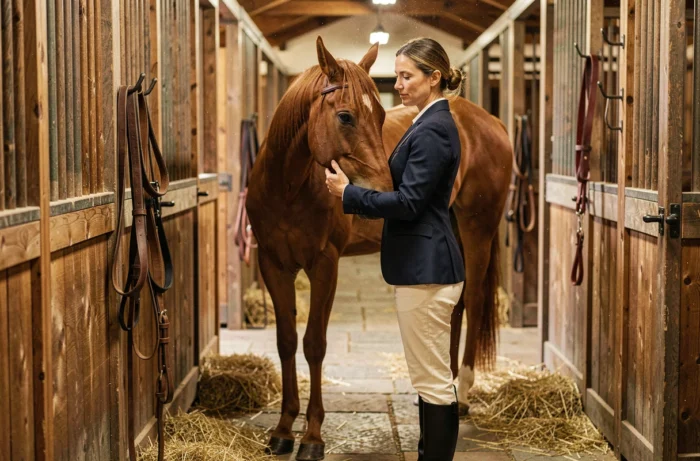
Equestrianism simultaneously engages several hundred muscles and joints with each stride of the horse. This overall body engagement, combined with the relationship with an animal weighing several hundred kilograms, produces measurable effects on the physical and mental health of riders.
Muscle and Postural Engagement in Equestrianism
Maintaining one’s seat on a moving horse requires continuous work on core stability and postural adjustment. The pelvis, abdominal muscles, paravertebral muscles, and thigh adductors contract continuously to accompany the gaits, from walk to gallop.
This work differs from gym exercises: the rider does not control the rhythm. It is the horse that sets the pace, and the body must adapt in real-time. This constraint develops proprioception, meaning the ability to perceive the position of one’s body in space without visual reference.
Regular riders often notice an improvement in their daily balance. The flexibility of the hips and lower back also progresses, as the amplitude of equestrian movement stretches muscle chains that are rarely engaged in a sedentary lifestyle. Structures like Equitorne allow practitioners to find a suitable framework to develop these physical gains over time.
Mental Health of the Rider: What Research is Beginning to Document
The calming effect of contact with the horse is often mentioned, but clinical evidence is still under construction. A bibliometric analysis published in September 2026 lists a body of studies on horse-assisted interventions while pointing out persistent methodological weaknesses. These interventions cannot yet be certified as a standard of best practice.
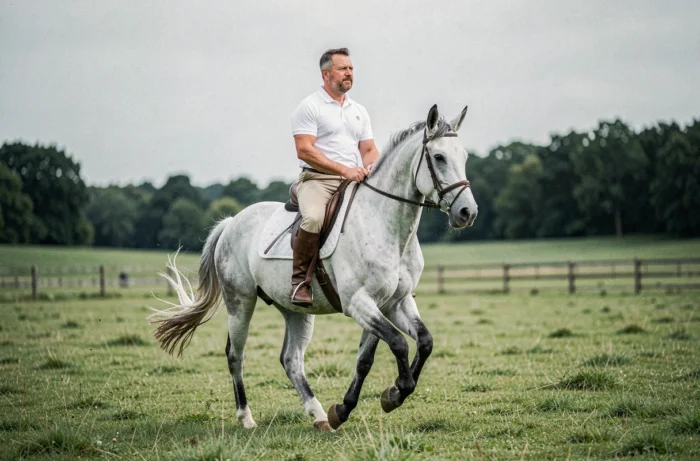
This nuance deserves to be noted. Feeling calm after a horseback riding session is an experience shared by the majority of riders. The reduction of perceived stress, the disconnection from screens, and the concentration required to manage a living animal: these factors contribute to a real sense of well-being.
Concentration and Emotional Regulation
Riding requires sustained attention. The rider must read the signals of their mount (ears, neck tension, breathing rhythm) while managing their own posture and aids. This simultaneous dual attention leads to emotional regulation, as a horse reacts immediately to the nervousness or abruptness of its rider.
Children particularly benefit from this mechanism. Learning to remain calm in front of an animal that weighs several times their weight develops self-control in a way that few other activities offer at this age.
Horse-Assisted Interventions and Cerebral Palsy in Children
Beyond recreational riding, therapeutic horse-assisted interventions are the subject of targeted studies. The 2026 bibliometric analysis reports statistically significant improvements in the motor dimension E of the GMFM (walking, running, jumping) in children with cerebral palsy, compared to conventional rehabilitation alone.
The three-dimensional movement of the horse’s back at the walk reproduces a pattern similar to human walking. For a child whose walking is impaired, this passive and rhythmic stimulation activates neurological circuits that are otherwise difficult to engage in traditional physiotherapy.
- The motor dimension E of the GMFM (walking, running, jumping) shows the most documented gains in this context.
- The horse’s walk transmits a movement to the rider’s pelvis that simulates bipedal gait, stimulating postural control.
- These results are not yet considered a validated clinical standard, but the trend in the data is consistent.
Injury Prevention and Concussion Risk in Equestrianism
Equestrianism remains a high-risk sport. The height of falls, speed, and unpredictable behavior of the animal create situations where serious injuries, including concussions, are not uncommon.
Federations are beginning to formalize prevention. Pony Club Australia has established a structured concussion management protocol, including steps for a gradual return to practice. This type of framework is still rare globally, but it signals a growing awareness.
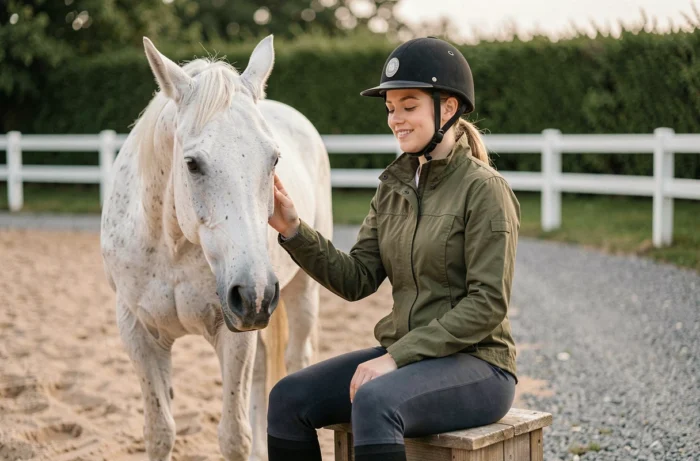
- Wearing a certified helmet significantly reduces the severity of head injuries in case of a fall.
- A gradual return protocol after a concussion prevents riders from getting back on too soon, limiting the risk of post-concussion syndrome.
- Training instructors to detect signs of concussion (confusion, loss of balance, nausea) is an underutilized prevention lever.
Adapting Practice to Age and Level
The risk of injury varies by equestrian discipline. Show jumping and cross-country expose riders more than dressage or leisurely outdoor riding at the walk. For children and beginner riders, choosing an equestrian activity suited to their level reduces risk without eliminating benefits.
The relationship between the rider and their horse also plays a protective role. A rider who knows their mount’s reactions can better anticipate deviations or refusals, which decreases risky situations.
The physical and mental benefits of equestrianism are tangible for the majority of practitioners, from deep muscle strengthening to emotional regulation. Therapeutic applications in children open promising avenues, even if research has not yet crossed the threshold of formal clinical validation. The sport remains demanding in terms of safety, and the widespread implementation of concussion prevention protocols is likely the next structuring challenge for the equestrian sector.