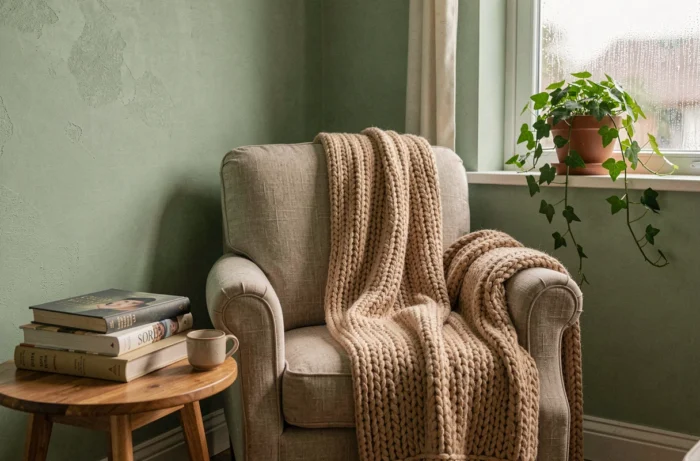
A cocoon, in interior decoration, refers to a space that combines thermal insulation, enveloping materials, and controlled light to create a sense of refuge. Transforming your home into a cocoon is not just about piling cushions on a sofa. The comfort experienced depends on measurable parameters (surface temperature of walls, air quality, lighting level) as well as aesthetic choices.
Thermal performance and cocooning ambiance: the link that decoration alone cannot resolve
Before choosing shades or materials, the first condition for a cozy interior remains the building’s envelope. A poorly insulated wall creates a cold surface that generates discomfort even when the thermostat displays a correct temperature.
The Climate and Resilience Law has made this subject very concrete for homeowners. Homes rated G on the energy performance certificate (DPE) are banned from rental since January 1, 2025, and those rated F will be banned starting January 1, 2028. Since April 1, 2023, an energy audit is mandatory for the sale of homes rated F or G.
Insulating from the inside (adding wall insulation, replacing windows) profoundly changes the room: available surfaces change, natural light may evolve, and ventilation must be reconsidered. The resources available on the homepage of Entrevue Web allow for exploring these renovation and layout topics in parallel.
In other words, cocooning starts with walls that do not radiate cold. It’s less appealing than a wool blanket, but significantly more effective.
Materials and shades: building a coherent cocooning palette
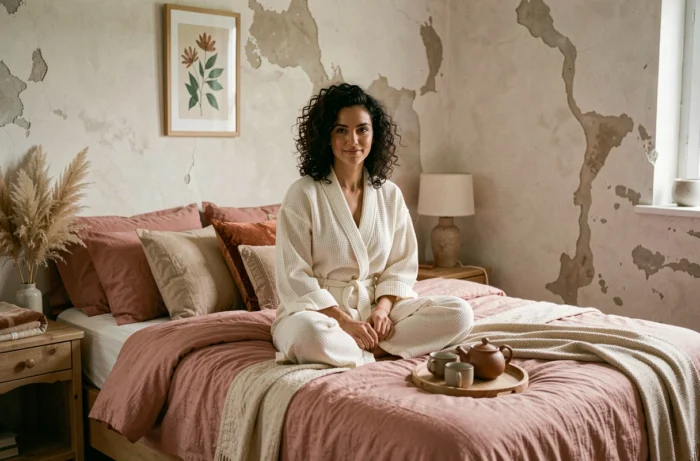
Once the envelope is treated, the choice of materials and colors determines the atmosphere of each room. The current trend moves away from the accumulation of textiles towards what some call “warm minimalism,” a blend of Japandi (Scandinavian-Japanese mix), wabi-sabi, and cottagecore aesthetics.
Shades: favor depth over harsh contrasts
Earthy colors (clay, terracotta, sage green, warm beige) visually absorb light and soften volumes. Applying a deep shade on just one wall of the living room is enough to anchor the space without darkening it.
A common mistake is to paint all rooms the same “neutral” color. A successful cocoon varies its atmospheres: a bedroom can handle more muted shades than a living space, because the needs for light and rest differ.
Materials: the rule of three textures per room
Mixing three distinct textures per space creates sensory richness without clutter. For example, in a living room: a corduroy sofa, a jute rug, and linen cushions. Each material brings a different sensation to the touch and the eye.
- Linen and washed cotton provide a raw look that ages well and washes easily, suitable for living areas and bedrooms.
- Looped wool or velvet adds visual thickness to the living room, especially on seating and throws.
- Raw wood or rattan introduces a rigid structure that contrasts with textiles and avoids the “all soft” effect.
Accumulation (five types of cushions, three throws, two overlapping rugs) produces the opposite effect of a cocoon: a saturated space where the eye finds no resting place.
Natural and artificial light: two regimes to be treated separately
Light is the most underestimated parameter in cocooning decoration. Poorly thought-out lighting cancels out the effect of carefully chosen materials.
Natural light is managed through windows and sheer curtains, not just by drapes. A filtering linen sheer allows light to pass while diffusing direct rays, avoiding harsh contrast zones in the room. In the bedroom, a blackout curtain paired with a sheer allows for modulating the ambiance between morning and evening.
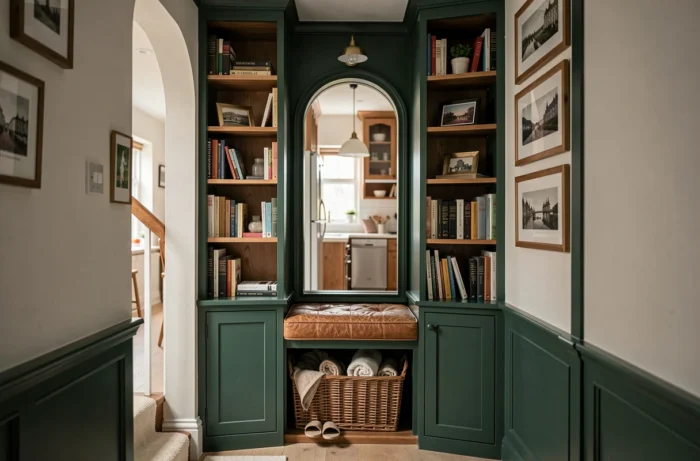
For artificial lighting, multiplying light sources remains the basic principle. A single ceiling light in the center of a room produces a flat, cold glare. Three to four distributed sources (reading lamp, wall sconce, warm white LED garland, table lamp) allow for composing the ambiance according to the moment.
The color temperature of bulbs makes all the difference. Bulbs around 2,700 kelvins reproduce a warm light comparable to that of a candle. Beyond 4,000 kelvins, the lighting turns clinical white, incompatible with a refuge atmosphere.
Indoor air quality: the invisible comfort of a true cocoon
A comfortable interior is not limited to what can be seen or touched. Air quality plays a direct role in the feeling of well-being, and well-insulated homes pose a specific challenge: the more airtight the envelope, the more effective the ventilation must be.
According to the ARS (Regional Health Agency), indoor air can be several times more polluted than outdoor air, due to volatile organic compounds emitted by new furniture, paints, cleaning products, and scented candles, a paradox for those seeking to create a cocooning atmosphere.
- Ventilating each room for at least ten minutes a day, even in winter, renews the air without permanently cooling the walls.
- Checking the proper functioning of the mechanical ventilation system (VMC) prevents moisture accumulation, a source of mold and respiratory discomfort.
- Choosing low-VOC paints and textiles protects air quality in the long term.
A healthy cocoon relies on renewed air, not just on soft materials. This is the condition for visual and tactile comfort to translate into real physical well-being.
Transforming a house into a cocoon ultimately hinges on a balance between effective insulation, limited but appropriate material choices, adjustable light, and properly renewed air. The trap would be to treat these parameters in isolation: a beautifully decorated living room in a poorly ventilated home remains a space where the feeling of comfort eventually degrades.