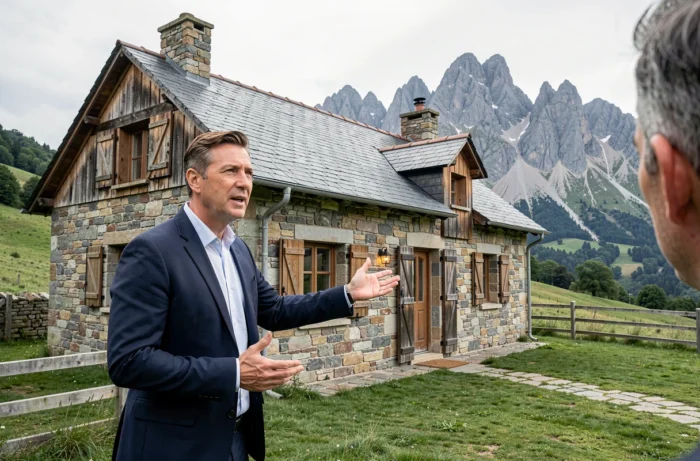
A plot identified in the Aure valley, an attractive price per square meter, an unobstructed view of the Pic du Midi. Everything seems in place to launch a real estate project in the Hautes-Pyrénées. Then comes the consultation of the Risk Prevention Plan: the land is located in a blue zone, with regulations that modify the budget by several thousand euros.
This kind of situation regularly occurs in department 65, where the geography imposes checks that most real estate guides do not mention.
Natural risks in the Hautes-Pyrénées: what the PLU does not say alone
We often start by checking the Local Urban Planning Plan to see if a plot is buildable. This is necessary, but largely insufficient in a mountainous department.
The Hautes-Pyrénées have municipalities classified as zone of seismicity 4, which imposes rules for seismic dimensioning for new constructions. In practical terms, this means reinforced anchoring of structures and, for certain projects (extensions, atypical houses), the mandatory intervention of a specialized engineering firm. The additional cost is not negligible and must be included in the budget from the preliminary project stage.
The PPRI and the Géorisques site must be consulted at the exact address of the property. The PPRI is a regulatory document that is enforceable: in red zones, construction may be completely prohibited. In blue zones, it remains possible but under prescriptions (elevated floors, protected equipment, water-resistant materials).
The risk of flooding, runoff, landslides, or shrink-swell of clays can alter a project after the purchase offer if it has not been identified beforehand.
Real estate listings offered on sires-immobilier.fr to direct searches between individuals, the approach remains the same: before signing, check the natural risks on the parcel, not just the theoretical buildability.
Construction budget in 65: underestimated items
Most budget estimates for a new house in the Hautes-Pyrénées focus on the price of the land and the construction cost per square meter. These two items represent only part of the actual envelope.
Seismic constraints and soil adaptation
In areas classified as having significant seismic zones, the sizing of foundations and the load-bearing structure must comply with precise standards. The cost of the structural engineering firm is added to the contractor’s quote, and reinforced foundations (wider footings, additional rebar) increase the bill compared to a construction in the plains.
Feedback varies on this point depending on the nature of the soil and the altitude, but there is consistently a gap between the initial “standard” quote and the quote adapted to local constraints.
Prescriptions related to flood risks
In the blue zone of the PPRI, technical prescriptions may include:
- The elevation of the living floor above the flood reference level, which modifies the design of the ground floor and sometimes accessibility
- The use of water-resistant materials for the lower parts (water-repellent coatings, specific joinery), with a non-negligible material cost increase
- The protection of technical equipment (electrical panel, boiler) positioned at height, which requires adaptation of the electrical and thermal plan
These items almost never appear in online budget simulators. They are discovered at the time of the soil study or the building permit application.
Real estate financing in the Hautes-Pyrénées: the return of credit is not enough
Loan rates have decreased compared to recent peaks, and several buyers see this as a signal to get started. A low rate does not compensate for a fragile financial setup.
In the Hautes-Pyrénées, local banks are aware of the specificities of the territory. They regularly ask for additional guarantees for properties located in identified risk areas, or for construction projects at altitude where construction times may be extended (bad weather, limited access in winter).
A few points to check before finalizing the setup:
- Does the borrower insurance cover the specific natural risks of the land? Some exclusions go unnoticed at signing
- Does the financing plan include a margin for additional costs related to PPRI or seismic prescriptions discovered after the offer?
- Are the fund release times compatible with a construction site in the mountains, where winter interruptions can delay delivery by several months?
Choosing land in the Hautes-Pyrénées: operational checks
The price per square meter in the department remains accessible compared to national averages, with marked differences between the foothills (around Tarbes) and the tourist valleys (Saint-Lary-Soulan, Loudenvielle). This accessibility is attractive, but a cheap plot with hidden constraints costs more than a well-located plot.
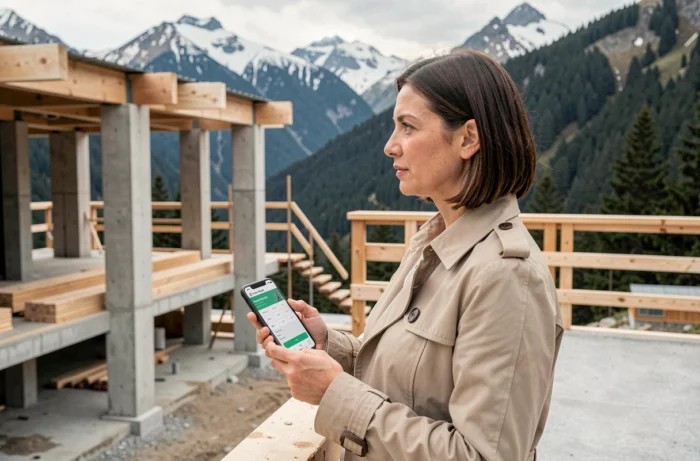
Before signing a compromise, it is recommended to cross-reference three sources: the municipality’s PLU for buildability, the PPRI for flood and landslide risks, and the seismic zoning for applicable construction standards. These three documents are available for free, but no one will consult them for you.
For secondary residence projects in the mountains, an additional parameter deserves attention: the winter accessibility of the land. A chalet on the side of a valley may become inaccessible for several weeks a year, complicating both the construction and daily life. Municipalities like Campan, Bagnères-de-Bigorre, or Capvern offer a compromise between a mountain setting and reliable road access year-round.
The best-prepared real estate project in the Hautes-Pyrénées is the one that integrates the constraints of the territory before the first meeting at the bank. The purchase price, the view, and the area tell only part of the story. The soil, regulatory zoning, and technical prescriptions write the rest of the budget.