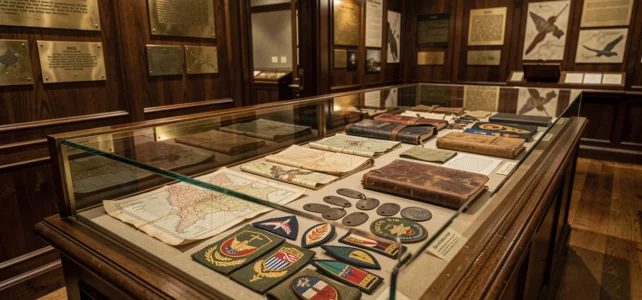
The Second World War pitted two coalitions against each other with very different logics. On one side, three expansionist powers linked by bilateral pacts. On the other, nations with incompatible political regimes, united by the necessity to contain this expansion. Understanding the forces of the Axis and the Allies begins with grasping why these alliances formed, what held them together, and what weakened them from within.
War of Attrition in the Mediterranean: the Front the Axis Could Not Hold
School curricula often present the war as a series of decisive battles. Recent historiography offers a different perspective. An article published in 2026 in Historical Research argues, based on underutilized Axis sources, that the defeat of the Axis in the Mediterranean was not due to a single military “turning point.” It resulted from a continuous erosion of naval air capabilities that the Italian and German war economies simply could not compensate for.
Why does this detail matter? Because it alters the classical reading. Mussolini’s Italy did not have an industrial base comparable to that of Germany. Its navy and air force, engaged in North Africa and the Aegean Sea, were wearing out without being replaced at the same rate. The Axis was losing the resource war before losing the battles.
The detailed composition of the Axis and Allied forces reveals how the industrial imbalance between the two camps affected the outcome of the conflict, far beyond just victories on the ground.

Tripartite Pact and Allies: Two Opposing Alliance Logics
Germany, Italy, and Japan formalized their rapprochement through the Tripartite Pact in September 1940. Five other European nations later joined them: Bulgaria, Croatia, Hungary, Romania, and Slovakia. Each had its own motivations, often territorial.
On the other side, the Allies gathered regimes that were ideologically divided. The United Kingdom, a parliamentary democracy; the USSR, a communist regime; the United States, a long-isolationist liberal power. Their commonality: the direct threat posed by the Axis to their interests or survival.
What Held the Axis Together (and What Weakened It)
The Axis powers shared two objectives according to the Encyclopedia of the Holocaust (USHMM): territorial expansion through military conquest and the destruction or neutralization of Soviet communism. In contrast, there was no real operational coordination between Berlin and Tokyo. Germany and Japan were waging two parallel wars, without a common plan.
The Axis satellite countries in Europe (Hungary, Romania, Bulgaria) primarily obeyed German diplomatic and military pressure. Their commitment remained fragile. Several attempted to switch sides as soon as the balance of power shifted.
What Held the Allies Together (Despite Their Disagreements)
- A clearly identified common enemy: the military expansion of the Axis directly threatened each member of the coalition, whether in Europe, the Asia-Pacific, or North Africa.
- An unmatched combined industrial capacity: the United States, the USSR, and the United Kingdom could produce military equipment in quantities that the Axis could never match.
- Regular coordination conferences: Tehran, Yalta, Potsdam. These summits allowed for the alignment of strategic priorities despite divergent interests regarding the post-war period.
The Allies coordinated where the Axis compartmentalized. This structural difference played a decisive role in the duration of the conflict.
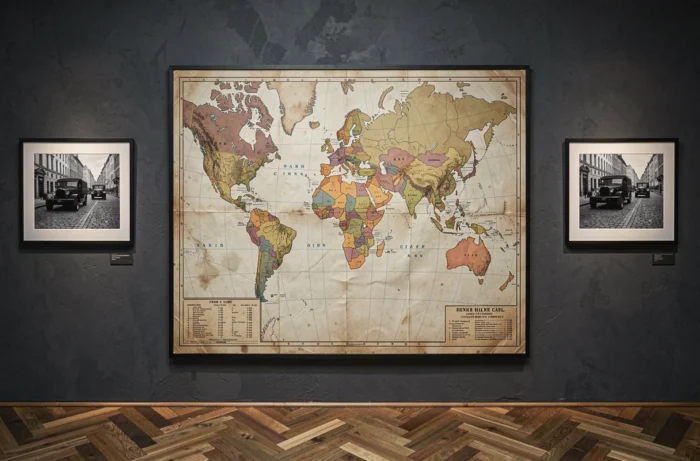
Secret War and Political Influence: An Invisible Front
School summaries focus on battles. They overlook an aspect that recent research highlights: the influence war conducted behind the scenes.
A study published in 2026 by The Debrief describes the operations of the British Security Coordination. This British organization cultivated American journalists, exposed Axis networks in the United States, and bolstered interventionist arguments in American public opinion, all before the official entry of the United States into the war.
This work of clandestine persuasion contributed to shifting American opinion towards supporting the Allies. The Japanese attack on Pearl Harbor certainly hastened the decision, but the political ground had already been prepared.
Resistance and Collaboration in Occupied Territories
In the territories occupied by Japan in Southeast Asia, the reality was more nuanced than a simple opposition between resistors and collaborators. A 2026 study published in the Journal of Southeast Asian Studies shows that in the occupied Philippines, local actors navigated between resistance, collaboration, and informal economy depending on the circumstances.
This observation also applies to occupied Europe. In France, the Vichy government officially collaborated with Germany while resistance networks were organizing on the territory. The boundaries between these stances were often porous at the local level.
Assessment of Forces: Why the Allies Won
Several structural factors explain the Allied victory:
- Industrial superiority: the combined United States and USSR produced a quantity of military equipment that the Axis could not match, despite the initial effectiveness of the German war machine.
- Excessive expansion of the Axis: Germany was fighting simultaneously on the Eastern front, in the Mediterranean, and in the West. Japan was stretching over a vast perimeter in the Pacific.
- Allied strategic coordination: where the Axis waged separate wars, the Allies planned operations together, such as the Normandy landings.
- The late but massive entry of the United States into the war after Pearl Harbor, which changed the overall balance of power.
The Axis won the early battles, the Allies won the resource war. The German Blitzkrieg and Japanese expansion in the Pacific created rapid victories. The duration of the conflict transformed these conquests into logistical burdens that were impossible to maintain against adversaries capable of mobilizing entire economies.
The Second World War remains the conflict where industrial power and the ability to form durable coalitions weighed more heavily than initial tactical superiority. Germany, Italy, and Japan had formidable armies, but their inability to coordinate their efforts and sustain a long war sealed their defeat.