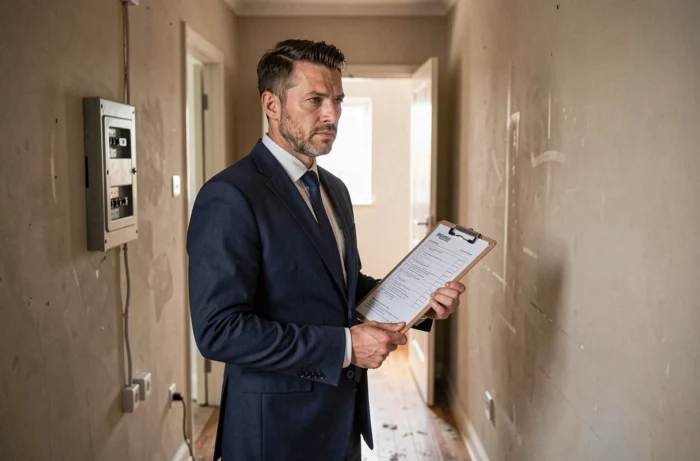
A tenant who terminates their electricity contract two weeks before returning the keys, a new apartment not yet connected, a power cut from Enedis on the day of the appointment: we find ourselves in the dark when it comes time to conduct the inventory. The question then arises directly, as an inventory without electricity complicates the verification of many appliances and can lead to lasting disputes between landlord and tenant.
Linky Meter and Same-Day Power Cut: The Most Common Trap
With the massive rollout of smart meters, terminating an electricity contract now results in a remote disconnection on the same day. There is no longer the few-day grace period that existed with older meters. As a result, a departing tenant who cancels their subscription the day before the inventory finds themselves without power the next morning.
This scenario has become the dominant situation on forums and in agency feedback. The most straightforward workaround is to keep the energy contract active until the day after the exit inventory, even if it means paying for one or two additional days of service.
A detailed article addresses the various situations in which one might find themselves facing an inventory without electricity on Ventes Immo, with the concrete consequences depending on whether the power cut originates from the tenant or the supplier.
Upon entering a property, the situation is different: it is the owner’s or agency’s responsibility to ensure that the connection is operational. If the power is not restored, the incoming tenant has every interest in demanding a postponement or making written reservations on the document.
Equipment Impossible to Test Without Power During the Inventory
Without electricity, a significant part of the property escapes any verification. We’re not just talking about lighting: the list of non-checkable items is longer than one might think.
- Electric roller shutters, motorized blinds, and automatic gates cannot be operated, preventing the detection of a faulty motor or a mechanical blockage
- Electric or induction cooktops, built-in ovens, extractor hoods, and water heaters remain impossible to test in real operation
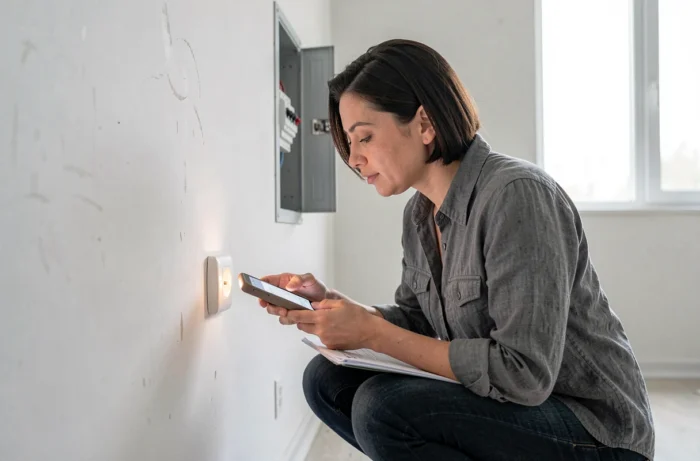
- The electrical panel itself cannot be properly checked: it is unclear if a circuit breaker trips, if a wall outlet works, or if a circuit has a fault
- The controlled mechanical ventilation (VMC) does not run, masking any potential malfunction or blocked duct
- The intercom or video intercom, the electric heating system, and the production of domestic hot water remain in the blind spot of the inventory
Any untested equipment must be noted as such on the document, with the explicit mention “not verified – absence of electricity.” Failing to write anything implicitly validates proper functioning, which can be costly at the end of the lease.
Reservations on the Inventory: Wording and Deadline to Protect Yourself
When signing an inventory conducted without power, the wording of the reservations makes all the difference. A silent observation regarding the absence of electricity will be interpreted as tacit agreement on the condition of the property.
How to Formulate Reservations in a Usable Manner
On the document, for each relevant piece of equipment, include a note such as: “Roller shutter bedroom 1 – not tested, electricity absent.” Each reservation must be individualized by room and by equipment. A generic mention (“electricity cut”) is insufficient if a dispute arises before a conciliation commission.
In an entry inventory, the tenant has a deadline to complete the document after power restoration. This deadline allows them to report any malfunction observed once electricity is back. A registered letter must then be sent, precisely describing the noted anomalies.
Take Photos Even Without Light
The phone’s flash does not replace proper lighting, but it provides a minimum. Photograph the electrical panel, outlets, switches, and any suspicious equipment. These time-stamped images serve as additional evidence in case of later disputes.

Decency Obligation of the Property and Electrical Diagnosis in Rentals
Common content on the subject focuses on the formal validity of the inventory. They overlook a structuring point: the obligation to deliver a decent property is continuous throughout the duration of the lease. The Court of Cassation reiterated this in a ruling on November 14, 2024 (Civ. 3e, n°23-12.650). The tenant’s knowledge of the property’s condition at the time of signing does not relieve the landlord of this obligation.
Additionally, any property with an electrical installation older than fifteen years must undergo an electrical diagnosis before being rented out. This document, valid for six years, highlights installation anomalies without imposing immediate repairs on the landlord. However, a negative diagnosis combined with a lack of electricity during the inventory significantly complicates the landlord’s position in case of a dispute.
If an electrical failure occurs during the lease and is related to the obsolescence of the installation, the financial burden of the repair falls on the landlord. The tenant, for their part, remains responsible for routine maintenance (replacing bulbs, defective switches due to normal wear and tear).
Refusing or Postponing an Inventory Without Electricity
It is perfectly acceptable to request a postponement of the inventory if the power is cut. No legal provision requires signing a report under conditions that prevent a proper inspection. In practice, feedback varies on this point: some agencies accept a postponement without difficulty, while others exert pressure to maintain the original date.
An inventory signed in the dark commits both parties to a partial report. If the departing tenant refuses to postpone and the landlord signs nonetheless, the damages that are not visible due to the lack of power will be very difficult to attribute to the tenant later. Conversely, an incoming tenant who signs without reservations in a property without electricity exposes themselves to having to prove that the malfunctions existed before their arrival.
The most protective solution for both parties remains to schedule the appointment on a date when power is guaranteed, keeping the energy contract active until the day after the inventory. A few extra euros in subscription fees can prevent months of disputes.